HISTORY
 The beginning of the protection of this region dates back to 1955, when the institution of that time, called the Institute for Nature Protection and Scientific Studying of Natural Rarities, puts 1000 ha of Monostor forest under the protection, because it was the shelter of the white-tailed eagle and the black stork. Eight years later, in 1963, People's Board of Sombor commune declares 600 ha of mixed forests (the black poplar, the white poplar, the white willow, etc.) from the region of Monostor marsh the Nature reserve. In December 1978, the Municipal Assembly of Sombor declares 74,93 ha of Monostor forest the Special nature reserve, and 6,06 ha the nature monuments. An important shift in the protection of this area happened in 1982, when the Municipal Assemblies of Sombor and Apatin, on the basis of the opinion of Provincial Institute for nature protection brought the decision to declare the Regional park “Gornje Podunavlje” (the Upper Danube Basin) on the territory of 9996 ha. After that, the Municipal Assembly of Apatin, in 1987, declared the locality “Mirković bara” (Mirkovic swamp) the nature reserve, “Bestrement” the Reserve for preserving genetical reserves of rare and endangered plant and animal species. The beginning of the protection of this region dates back to 1955, when the institution of that time, called the Institute for Nature Protection and Scientific Studying of Natural Rarities, puts 1000 ha of Monostor forest under the protection, because it was the shelter of the white-tailed eagle and the black stork. Eight years later, in 1963, People's Board of Sombor commune declares 600 ha of mixed forests (the black poplar, the white poplar, the white willow, etc.) from the region of Monostor marsh the Nature reserve. In December 1978, the Municipal Assembly of Sombor declares 74,93 ha of Monostor forest the Special nature reserve, and 6,06 ha the nature monuments. An important shift in the protection of this area happened in 1982, when the Municipal Assemblies of Sombor and Apatin, on the basis of the opinion of Provincial Institute for nature protection brought the decision to declare the Regional park “Gornje Podunavlje” (the Upper Danube Basin) on the territory of 9996 ha. After that, the Municipal Assembly of Apatin, in 1987, declared the locality “Mirković bara” (Mirkovic swamp) the nature reserve, “Bestrement” the Reserve for preserving genetical reserves of rare and endangered plant and animal species.  The abundance of plant and animal forms which settle this region, containing great number of rare and endangered species, as well as the fact that this region represents the group of different ecosystems under the dominant influence of the Danube, which means globally endangered marshy ecosystems, resulted in the need for revalorization of the natural resources of this region. In the second half of the nineties of the last century the Institute for Nature Protection of Serbia, performs a number of terrain activities, published in the essay “Special nature reserve Gornje Podunavlje – the suggestion for putting under protection as a natural asset of the great importance”, which emphasized the need to put the protection of this region to a higher level. Therefore the Government of the Republic of Serbia passed a Decree in July 2001 by which 19648 ha of Sombor and Apatin communes were declared the Special nature reserve “Gornje Podunavlje”, which meant the natural asset of the I category. In the reserve itself a three degree regime of protection was established, by which all territories were put into I, II or III degree of protection. Out of the whole territory, 261.62 ha were put under the protection regime of the I degree, which absolutely forbade the use of natural resources and excluded any other form of use of the area and activities except scientific researches and controlled education. According to that Decree 4843.81 ha were under the protection regime of the II degree where is forbidden clear cutting of forests and disturbing the terrain hydrology and morphology; other 14542.47 were under the protection regime of the II degree where some forest, hunting and fishing activities were allowed (in fact, apart from burning reed and some general prohibitions like disturbing the terrain morphology and integrity, destroying plant and animal species, everything else was allowed). The abundance of plant and animal forms which settle this region, containing great number of rare and endangered species, as well as the fact that this region represents the group of different ecosystems under the dominant influence of the Danube, which means globally endangered marshy ecosystems, resulted in the need for revalorization of the natural resources of this region. In the second half of the nineties of the last century the Institute for Nature Protection of Serbia, performs a number of terrain activities, published in the essay “Special nature reserve Gornje Podunavlje – the suggestion for putting under protection as a natural asset of the great importance”, which emphasized the need to put the protection of this region to a higher level. Therefore the Government of the Republic of Serbia passed a Decree in July 2001 by which 19648 ha of Sombor and Apatin communes were declared the Special nature reserve “Gornje Podunavlje”, which meant the natural asset of the I category. In the reserve itself a three degree regime of protection was established, by which all territories were put into I, II or III degree of protection. Out of the whole territory, 261.62 ha were put under the protection regime of the I degree, which absolutely forbade the use of natural resources and excluded any other form of use of the area and activities except scientific researches and controlled education. According to that Decree 4843.81 ha were under the protection regime of the II degree where is forbidden clear cutting of forests and disturbing the terrain hydrology and morphology; other 14542.47 were under the protection regime of the II degree where some forest, hunting and fishing activities were allowed (in fact, apart from burning reed and some general prohibitions like disturbing the terrain morphology and integrity, destroying plant and animal species, everything else was allowed).
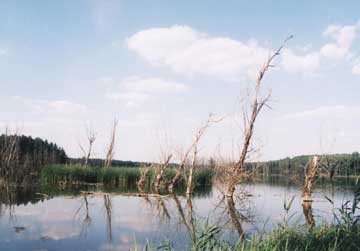 And yet, concerning the international aspect, because of its special ornithofauna, the Upper Danube Basin is on the list of IBA (Important bird area) region. It is also on the list of suggestions for the network of future Biosphere reserves (“European Life Line Drava – Mura, Proposal for a transfrontier nature reserve”), within the realization of IUCN and EURONATUR (MaB – Man and the Biosphere programme). Besides, it is included in Danube – Carpathian programme under authority of WWF. As a part of international protection activities one should know that, from the ecological point of view, the Upper Danube Basin is only a part of a much bigger nature unit whose parts spread through neighbouring Hungary and Croatia, as well. Since this asset is under the great degree of protection in all three countries (Nature park “Kopački rit” in Croatia and National park “Duna – Dráva” in Hungary) it was logical for the Upper Danube Basin to become a part of these programmes where the possibility of crossborder protection of nature assets is being realized, which in the case of the Upper Danube Basin is the only solution. And yet, concerning the international aspect, because of its special ornithofauna, the Upper Danube Basin is on the list of IBA (Important bird area) region. It is also on the list of suggestions for the network of future Biosphere reserves (“European Life Line Drava – Mura, Proposal for a transfrontier nature reserve”), within the realization of IUCN and EURONATUR (MaB – Man and the Biosphere programme). Besides, it is included in Danube – Carpathian programme under authority of WWF. As a part of international protection activities one should know that, from the ecological point of view, the Upper Danube Basin is only a part of a much bigger nature unit whose parts spread through neighbouring Hungary and Croatia, as well. Since this asset is under the great degree of protection in all three countries (Nature park “Kopački rit” in Croatia and National park “Duna – Dráva” in Hungary) it was logical for the Upper Danube Basin to become a part of these programmes where the possibility of crossborder protection of nature assets is being realized, which in the case of the Upper Danube Basin is the only solution.
|


