TOWN
The story about Sombor's vegetation is actually the story about the urbanization of the region. The very beginnings take us back to the antient past, at the turn of the 17 th and 18 th centuries. On the maps from that time Sombor was shown as a settlement on 13 islands.Tthat was because many branches of at the time big river Mostonga flew through the town and made it muddy. As well as most plain rivers, Mostonga used to flood, which bad public circumstances made even worse.
 The first great visionary of the urbanization of Sombor was a senator of the City administration, Jovan Markovic. In 1774 he was personally engaged in the acquisition of the oak tree by which 900 acres in Bukovac and 140 acres in Sikara were sown.This was how Bukovacka forest and Sikara were formed, which would later bring to town profit and solution for many public questions. And indeed, the real wolf chase was organized there! In addition to all this, Jovan Markovic strongly supported the idea of Kis brothers to dig a canal from the Danube to the Tisa, which would be permanent solution for the taking away superfluous water from the town. This idea was realized in the period 1793 –1802 when at the time called Franc's canal was officially opened. With some slight changes it is nowadays called Veliki Backi canal. That was the important moment for Sombor and its surroundings, because by digging the canal, big areas were drained and turned into cultivable soil. The first great visionary of the urbanization of Sombor was a senator of the City administration, Jovan Markovic. In 1774 he was personally engaged in the acquisition of the oak tree by which 900 acres in Bukovac and 140 acres in Sikara were sown.This was how Bukovacka forest and Sikara were formed, which would later bring to town profit and solution for many public questions. And indeed, the real wolf chase was organized there! In addition to all this, Jovan Markovic strongly supported the idea of Kis brothers to dig a canal from the Danube to the Tisa, which would be permanent solution for the taking away superfluous water from the town. This idea was realized in the period 1793 –1802 when at the time called Franc's canal was officially opened. With some slight changes it is nowadays called Veliki Backi canal. That was the important moment for Sombor and its surroundings, because by digging the canal, big areas were drained and turned into cultivable soil.
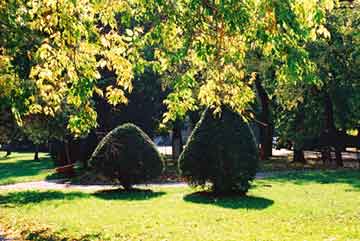 Greater part of the 19 th century was marked by occasional intentions to green Sombor. The town had “mulberry orchard” which produced seedlings, at the first place of mulberry tree, but also of other trees by which the town streets were made green. Also, Bukovacka forest and Sikara were managed in the way that by selling the wood, the funds for the needs of town were provided. In the course of time, Sikara became the favourite picnic place of the residents of Sombor, and would remain it till the end of the last century. The serious clearing of Bukovacka forest began in the 70s of the 19 th century. By this the resources for the cobbling of Apatinska street, Bajski sokak, Main street and Bezdan road were provided. Somewhere in that period the forming of two, out of now existing three, whole parks in town started. Those were the park in front of the District Perfecture – Zupanija and the park next to the railway station. The mayor of that time, Petar Vukicevic, was especially responsible for that. The parks were formed gradually, during many years, by making paths, putting benches and planting trees. The care for Sombor's vegetation was taken over by dr. Benjamin – Bene Cihas, the mayor of Sombor, the pioneer of bringing hackberry tree to the streets of Sombor. He died too early in 1893 of tuberculosis, and that illness probably was the main reason for his great attention to town's parks. Then very intensive huckberry tree planting started and it continued during the following several decades. The first enthusiasts could not even imagine that this tree was in the future to be the reference for which Sombor would be very famous. Concerning the park in front of Zupanija, it was recorded that the planting of huckberry tree started in 1898. At the beginning of the 20 th century there was intensive planting at Venac ( Garland ) and also at Bajski sokak, where the too old plane trees were firstly taken out. The park in front of the Town Hall was about to see its complete clearing and cobbling in the near future. Greater part of the 19 th century was marked by occasional intentions to green Sombor. The town had “mulberry orchard” which produced seedlings, at the first place of mulberry tree, but also of other trees by which the town streets were made green. Also, Bukovacka forest and Sikara were managed in the way that by selling the wood, the funds for the needs of town were provided. In the course of time, Sikara became the favourite picnic place of the residents of Sombor, and would remain it till the end of the last century. The serious clearing of Bukovacka forest began in the 70s of the 19 th century. By this the resources for the cobbling of Apatinska street, Bajski sokak, Main street and Bezdan road were provided. Somewhere in that period the forming of two, out of now existing three, whole parks in town started. Those were the park in front of the District Perfecture – Zupanija and the park next to the railway station. The mayor of that time, Petar Vukicevic, was especially responsible for that. The parks were formed gradually, during many years, by making paths, putting benches and planting trees. The care for Sombor's vegetation was taken over by dr. Benjamin – Bene Cihas, the mayor of Sombor, the pioneer of bringing hackberry tree to the streets of Sombor. He died too early in 1893 of tuberculosis, and that illness probably was the main reason for his great attention to town's parks. Then very intensive huckberry tree planting started and it continued during the following several decades. The first enthusiasts could not even imagine that this tree was in the future to be the reference for which Sombor would be very famous. Concerning the park in front of Zupanija, it was recorded that the planting of huckberry tree started in 1898. At the beginning of the 20 th century there was intensive planting at Venac ( Garland ) and also at Bajski sokak, where the too old plane trees were firstly taken out. The park in front of the Town Hall was about to see its complete clearing and cobbling in the near future.
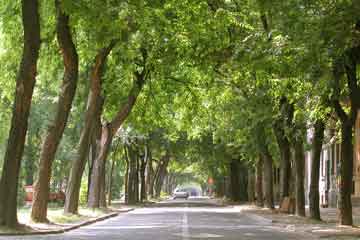
 Today there is no longer Bukovacka forest, while Sikara spreeads to 16,50 hectars. Approximately of the same size is Rokovacka forest near the old slaughterhouse,built after World War II, at the outskirts of town. Today it is park – forest as a part of Selenca. That most urban part of town got its own park in 1975. Although it is very difficult to distinguish where gardens stop and parks start in Sombor, the town is proud of its three parks: the town park, in front of Zupanija; the park next to the railway station; and the park in Selenca. The town streets are decorated by almost 8000 hackberry trees, but the shade is also made by numerous plane trees, chesnut trees, lindens and maples. They are the pride and the trademark of Sombor, the two and a half centuries of the urbanist planning. And it all started with a piece of fertile soil, abundance of water… and a few wise men. Today there is no longer Bukovacka forest, while Sikara spreeads to 16,50 hectars. Approximately of the same size is Rokovacka forest near the old slaughterhouse,built after World War II, at the outskirts of town. Today it is park – forest as a part of Selenca. That most urban part of town got its own park in 1975. Although it is very difficult to distinguish where gardens stop and parks start in Sombor, the town is proud of its three parks: the town park, in front of Zupanija; the park next to the railway station; and the park in Selenca. The town streets are decorated by almost 8000 hackberry trees, but the shade is also made by numerous plane trees, chesnut trees, lindens and maples. They are the pride and the trademark of Sombor, the two and a half centuries of the urbanist planning. And it all started with a piece of fertile soil, abundance of water… and a few wise men.
|


